Nowthen has 59 miles of road and a handful of trucks that public works uses to keep them plowed, sanded, and graveled. We plow with three big trucks: a 2023 Mack and two older Sterlings, a 2007 and a 2000. The new truck takes over front-line plowing from the 2007 Sterling, a used truck we bought around 2009 and set up to plow with a special front rig, and whose dump box has been welded back together more than once.
The three trucks we plow with
Here is the state of the plow fleet today:
- 2023 Mack Granite. The newest and most dependable truck, bonded for in 2021 and delivered in 2023. About 12,338 miles. This is the one we want as a primary plow for the next decade.
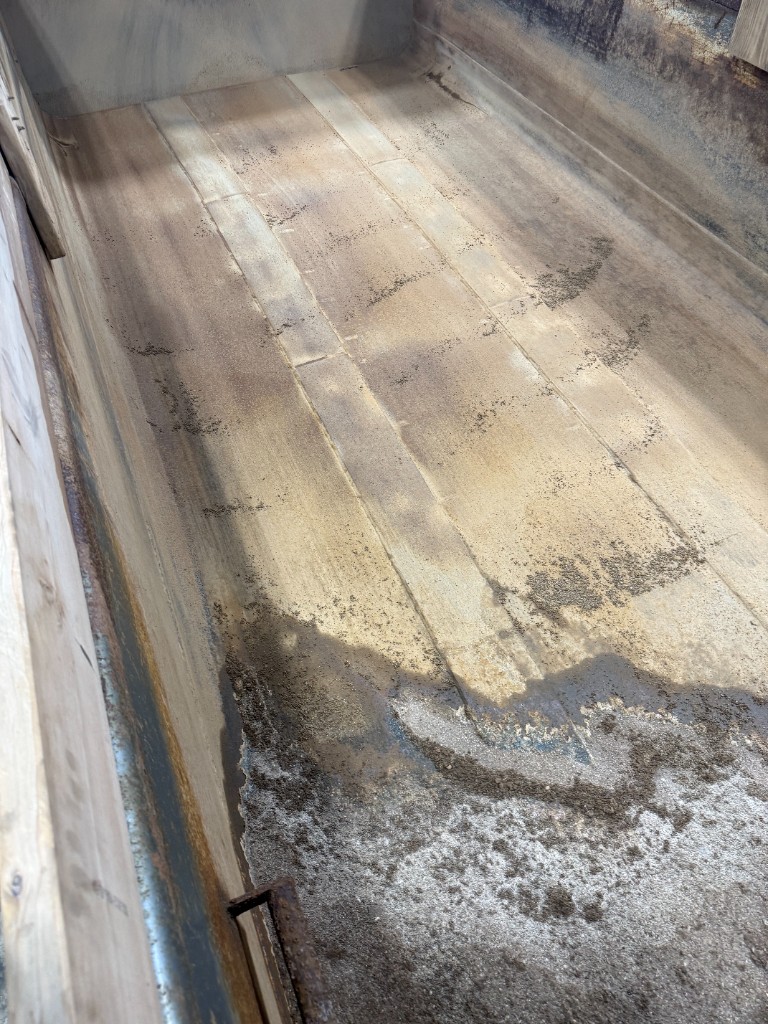
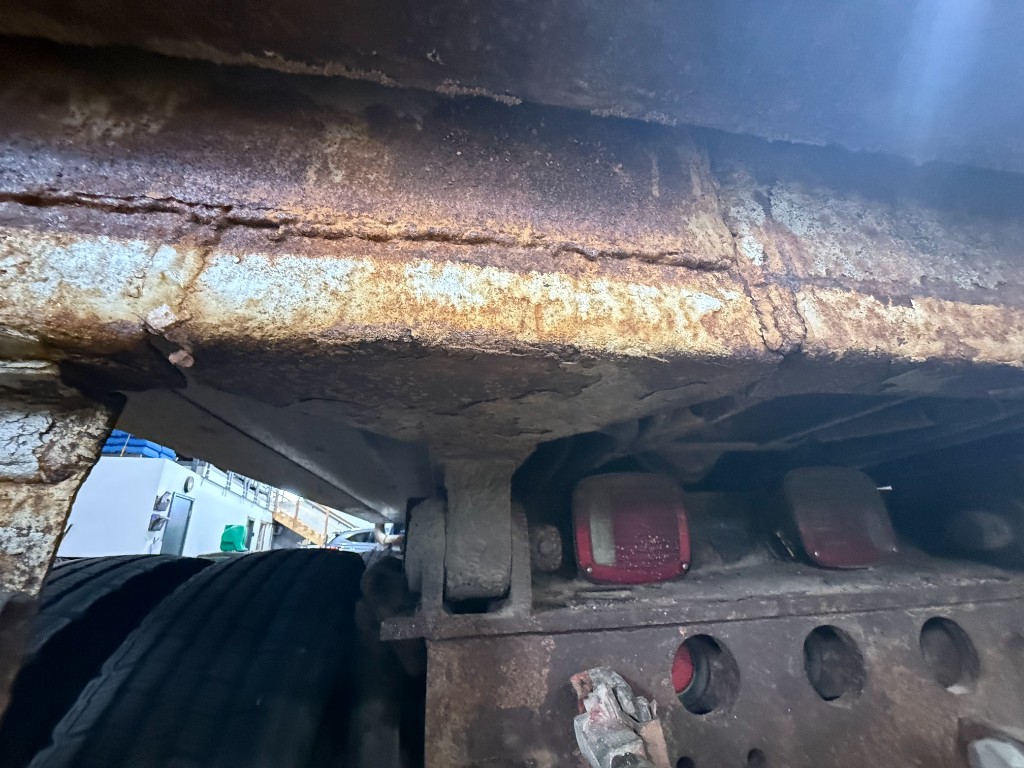
- 2007 Sterling. Bought used around 2009 and set up to plow with a special front rig. About 112,080 miles. The dump box has been welded the full length of the floor and patched where it cracked, and it no longer sits all the way down on the frame. This is the truck the new one takes over for.
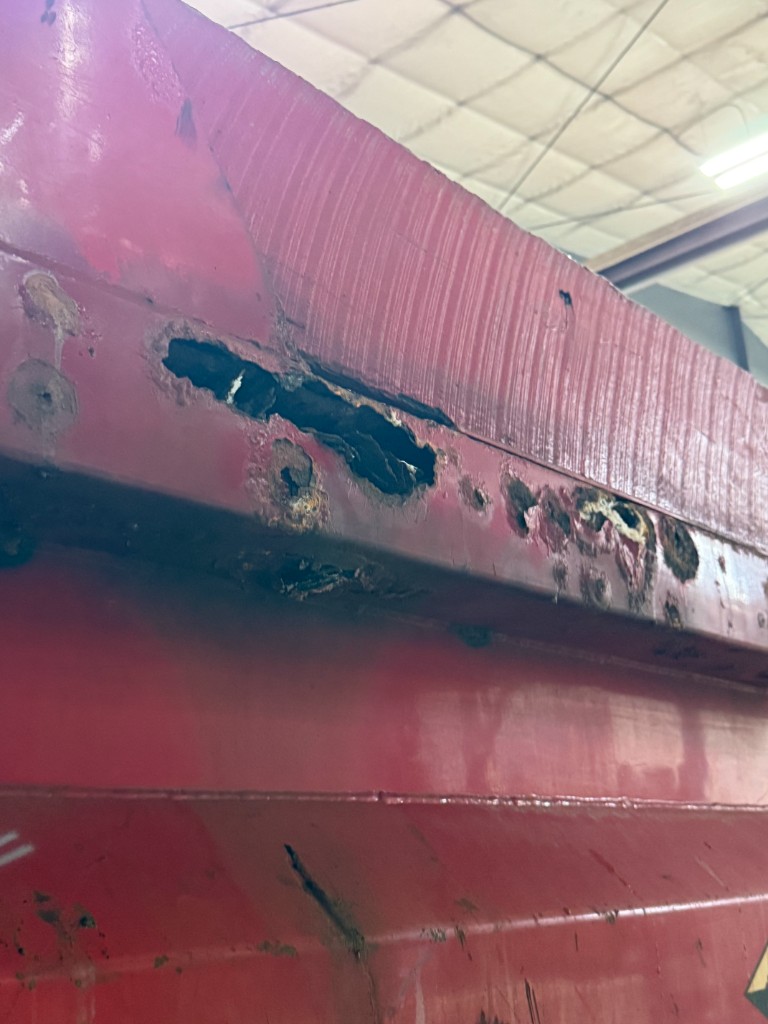
- 2000 Sterling. The backup. About 173,008 miles. Heavily rusted, with holes rusted clean through the box, and it just failed DOT inspection. It is not legal to drive right now.
The 2007 Sterling, the truck the new one replaces
The 2007 is the truck the new one takes over for. It was built as a dump truck, not a plow truck, and the city converted it: because it did not come from the factory set up to plow, a separate frame was mounted under the front and rests on the front axle so the plow can hang off it.
That works, and plenty of trucks have been rigged this way, but it is not how a purpose-built plow truck is made. A factory plow truck carries the blade on extended frame rails, so the weight of the plow feeds back into the truck's frame. Hanging it off the front axle instead puts more of that weight straight onto the axle and the front suspension, which is the part of the truck its weight rating is built around. The point is only that the 2007 plows through a workaround, not the way the job is built to be done.
The box is the real problem, and it is the reason the 2007 cannot stay a front-line plow. It was coming apart, so two steel plates were welded down the length of the floor to hold it together, the cracked rear end was welded in two places, and even now the box does not seat all the way down on the frame. If we keep the 2007 on the front line, that box has to be replaced outright, which is a large bill on top of everything else aging on the truck.
The real numbers on the new truck
The new truck costs $359,268.60. It breaks down like this:
$172,681.60 for the Mack chassis
$186,587.00 for the dump body and the full set of snow equipment: the plow, the wing, the underbody scraper, the hydraulics, and the sander
$359,268.60 total
Both pieces were quoted off the state purchasing contract, which is the cheapest way a small city can buy a truck like this. Nobody on the council went looking for a Cadillac. This is the standard, no-frills plow truck our roads require, bought at the state's negotiated price.
The 2000 Sterling and its $25,637 repair estimate
The other figure worth putting on the table is what it would take to keep the 2000 Sterling going. The shop estimate is Campbell Service estimate #29, dated May 22, 2026, written against the 2000 Sterling's VIN. The total is $25,637.41:
$20,475 in labor, about 146 hours at $140 per hour
$5,162 in parts
$25,637.41 total
Read the line items and a pattern jumps out: it is almost all catch-up safety and mechanical work, not improvement. Worn-out steering (king pins, U-joints, steer-axle spring pins). The brakes and air system (a leaking relay valve, frozen slack adjusters, ABS). Suspension, with all four rear bolster bushings worn through and every shock rusted out. A long list of oil leaks from the engine, transmission, and drive axles. None of that makes the truck better than it was. It just drags a failed, unsafe truck back up to where it is legal to drive again.
Just as important is what the $25,637 does not buy. It is all safety and mechanical catch-up. It does not replace the rusted dump box; the estimate only welds plates over the bad spots and paints them. So even after the full $25,637, what you have is a 26-year-old truck that is street-legal again, with a patched box and no guarantee on the rust still eating it everywhere the estimate did not touch.
The honest way to think about the 2000 is this: spend $25,637 to keep a roughly $8,000 truck legal as a backup, a little over three times what the truck is worth, and you still have a box living on borrowed time. That can make sense for a backup you rarely lean on. It is not a substitute for a dependable front-line plow.
Why not just buy a cheaper used truck?
A fair question is why we did not just buy a cheaper used truck. Our public works staff looked hard at it. A plow truck is not a regular dump truck. It needs extended front frame rails, front axles heavy enough to carry the plow, the right power takeoff for the hydraulics, a transmission built for plowing loads, and locking rear differentials. The catch is the $135,000: that is Staff's estimate for the snow equipment and upfit alone, the cost of turning a used truck into a plow truck. It is on top of whatever you pay for the used truck itself, not instead of it. So the real number is the price of the used truck plus roughly $135,000, and that is only if you can find a used truck with the correct specs to start with. In their words, finding the right one is like finding a unicorn.
How long these trucks are supposed to last
City staff also checked with surrounding cities and counties for the industry standard on how long these trucks stay in service. After hours of research, staff found the standard is to hold a truck 10 to 15 years before selling it and buying a new one. The reasons are the brutal wear these trucks take as salters, and the long lead time to get a new one built.
That 10-to-15-year number is not just our staff's opinion. The American Public Works Association treats formal lifecycle replacement as a core part of running a public fleet, and the research is even more aggressive. After analyzing ten years of maintenance records on roughly 900 single- and tandem-axle plows, an Iowa DOT study found the optimal replacement point was about six to seven years, and that agency has been working to bring its plow lifecycles down from around 17 years to 12. So whether you use the conservative 10-to-15-year window or the tighter numbers in the research, the conclusion is the same. The 2007 is near twenty and the 2000 is twenty-six, and both are well past where a responsible fleet keeps them.
It is the salt, not the miles
People point out that these trucks have low miles for their age, and that plenty of trucks on the road are older with far more miles. True, and it misses the point. A plow truck is not retired on its odometer. It is retired because of what salt does to it. Road salt is brutally corrosive. The brine packs into the frame rails, the brake lines, and the suspension and rots the truck from the undercarriage up. A long-haul truck that lives on the highway and a city plow truck that spends its winters spreading salt on itself are two completely different animals. You can pressure-wash a salt truck for hours and the salt still weeps back out of the frame. The salt, not the mileage, is what finished these trucks.
Why we ordered now instead of waiting
These trucks are not sitting on a dealer's lot waiting to be driven off. You order one and it gets built, and that takes a long time. We put our purchase order in now, but we will not take delivery until the end of 2027. That lead time is the whole reason you cannot wait for a plow truck to die before replacing it. If the 2007 finally gave out in the middle of winter, we would be at least a year from a replacement, and in the meantime we would have to press the grader into plowing the roads. The grader can do it, but it is slower, puts unnecessary hours on another expensive machine, and cannot spread sand or salt while it plows, which would leave the 2023 Mack to salt and sand all of Nowthen by itself.
Timing mattered for a second reason: cost. Emissions standards for these diesel trucks change on July 1, and a truck built under the new standard runs about $15,000 more. By getting our purchase order in before that deadline, we locked in the current standard and saved roughly $15,000.
Put it together and the choice was lopsided. One path keeps us depending on a jury-rigged 2007 with a dying box and a rusted 2000 that needs $25,637 just to be a legal backup, while also giving up that $15,000 by missing the emissions deadline. The other orders one dependable truck, at the locked-in price, so the 2023 Mack and the new truck carry the winter and the two tired Sterlings can step back and eventually be sold while they still hold some value.
I take spending Nowthen tax dollars seriously, and we are not flush with cash. A new plow truck is barely a blip in a big city's budget; in Nowthen's it is real money. But I could not justify keeping us one bad night away from pressing a grader into plow duty, while pouring money into trucks every responsible fleet would have already retired. Waiting for the 2007 or the 2000 to break down completely would have been the more expensive decision, not the careful one.
About this piece
This is a council member's own explanation of how he voted and why, written in the first person. The prices are quoted from the state purchasing contract and the public works staff estimates presented at the vote. For the rest of the city's vehicles and the paperwork behind each purchase, see the city vehicles and equipment page.